

Author: Florin Lata
The protection of intellectual property is considered an absolute priority by most major technology companies worldwide. Significant investments in innovation and creativity generate value when the resulting intellectual property is registered and protected through patents, trademarks, or industrial designs, thereby increasing a company’s market value. Given the specific characteristics of the information technology (IT) sector, industrial design protection represents an effective means of safeguarding intellectual property rights.
An industrial design is defined as “the appearance of the whole or a part of a product resulting from the features of, in particular, the lines, colours, shape, texture and/or materials of the product itself and/or its ornamentation.”
Industrial design protection covers the aesthetic appearance of a product, rather than the product itself. To qualify for protection, a design must be new, meaning that it must not be identical to any design made available to the public before the filing date of the application. If a design is disclosed to the public before registration, the designer generally has a 12-month grace period within which to file an application. Otherwise, the design may lose its novelty and consequently become ineligible for registration.
A design must also possess individual character, meaning that the overall impression it produces on an informed user must differ from the overall impression produced on such a user by any other design made available to the public before the filing date of the application for registration.
A design whose features are dictated solely by its technical function cannot benefit from industrial design protection. Therefore, an aesthetic element must be present. Furthermore, industrial design rights cannot protect features that must necessarily be reproduced in their exact form and dimensions to enable the product incorporating or applying the design to be mechanically connected to another product.
An industrial design registration is valid for an initial period of five years and may be renewed for successive periods, up to a maximum of 25 years. Following the expiry of this period, the registered design no longer benefits from protection under the industrial design registration and may generally be used freely.
As with trademarks and patents, registration is an important mechanism for obtaining legal protection. In Kosovo, industrial designs are registered with the Industrial Property Agency, while at the European Union level, registration is carried out through the European Union Intellectual Property Office (EUIPO).
Considering the limited awareness among local companies regarding industrial design protection and its potential application in the software industry, we will examine the example of Apple, which has registered a total of 5,702 designs in the European Union.
It should first be clarified that most of these registrations concern the physical products developed by Apple. However, some also cover the visual designs of applications, homepages, icons, and other graphical elements used by the company, many of which are widely recognised by its users.
Below, we present several examples of these registered designs.
Industrial Designs Registered by Apple with EUIPO in 2008:

Industrial Designs Registered by Apple with EUIPO in 2020:
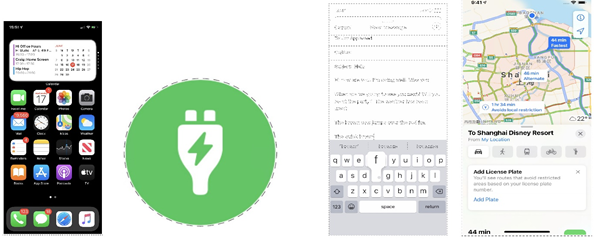
Apple Has Also Registered Icons as Industrial Designs, Including the Following:

It is important to note that, in addition to its 5,702 registered industrial designs, Apple also holds 716 registered trademarks with the European Union Intellectual Property Office (EUIPO) and registered 2,541 patents in the United States in 2021 alone.
A similar approach can be observed among other major technology companies. This demonstrates that such companies pursue comprehensive intellectual property protection strategies, ensuring that no category of industrial property rights is overlooked.
Kosovo-based IT companies should likewise prioritise the protection of their intellectual property rights by developing professional and comprehensive intellectual property strategies. In particular, industrial design protection should not be overlooked, as it represents an important legal instrument for enhancing the value of products and, consequently, the overall value of the company.
