

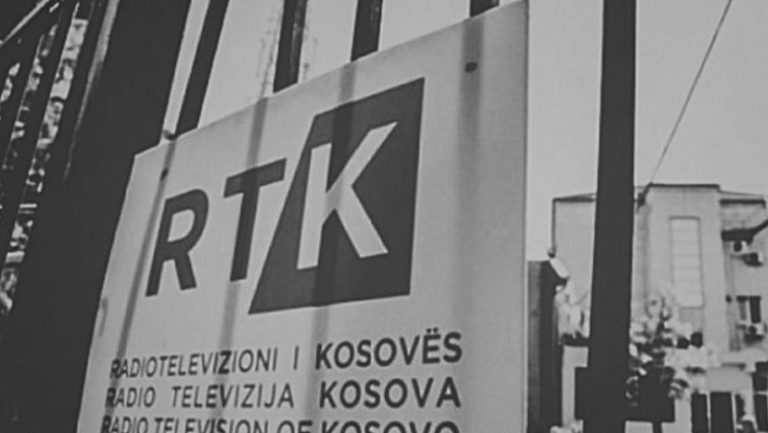
Recently, Radio Television of Kosovo (RTK), a public broadcasting institution in Kosovo financed through the state budget, announced a “Public Call for Independent Producers and Production Companies”. Specifically, the call was published on 2 October 2024, with interested applicants given until 15 October 2024 to submit their applications.
What raises concerns in this particular case is a condition imposed under this public call, namely the requirement that applicants must not have initiated any court proceedings against RTK.
From a legal perspective, such an exclusionary requirement constitutes a discriminatory measure that unjustifiably restricts equal access to opportunities to participate in public projects offered by an independent public institution such as RTK.
Of particular concern is the fact that RTK, as a public broadcaster, has faced several court proceedings in recent years concerning its failure to fulfill contractual obligations towards parties it had contracted for the supply of goods or provision of services.
In some cases, these disputes have even been initiated by producers and production companies, the very category of applicants targeted by the aforementioned public call. These proceedings have arisen from various types of violations, most notably breaches of contractual obligations and copyright infringements.
This means that if an individual or legal entity has filed a lawsuit against a public institution or publicly owned enterprise for breach of contract or on any other legal grounds, that individual or entity will face a condition preventing them from competing for other projects announced by the same institution.
By acting in this manner, RTK, as a public broadcaster financed through taxpayers’ money, is essentially violating applicants’ rights and creating an environment that is not only unfair but also contrary to the fundamental principles of good governance, which require fairness and transparency in the use of public funds.
This discriminatory requirement also raises concerns regarding the manner in which taxpayers’ money, which finances public institutions such as RTK, is managed.
If such an exclusionary practice were to become the norm across government institutions generally, it would create an unequal environment for everyone seeking justice. Consequently, such a practice would facilitate the exclusion from public competitions of all parties who dare to seek justice before the courts, denying them access to state-funded projects and restricting their participation in public services and contracts.
The unjustified exclusion of applicants creates a closed market in which free competition is restricted and public funds may be allocated to selected contractors, not on the basis of merit, but through the exclusion of parties that have had legal disputes with the institution. In such circumstances, public expenditure costs would increase, while transparency and accountability would be minimized.
This practice by RTK establishes a dangerous precedent which, if extended throughout the public sector, would undermine the fundamental principles of transparency and equal access to competitive opportunities.
Thus, public institutions or publicly owned enterprises not only violate the rights of parties by failing to fulfill their contractual obligations, but if those parties decide to seek legal protection against such violations, the institutions concerned effectively penalize them by excluding them from the opportunity to compete for other state-funded projects.
This constitutes a further violation of their rights, depriving them not only of effective legal protection but also of the right to equal access to competitive opportunities.
Under these circumstances, important questions arise:
Is it fair for parties seeking legal protection against violations committed by state institutions to be excluded from opportunities to compete for those institutions’ future projects? Is there a risk that this practice could spread to other public institutions?
These issues raise serious concerns regarding equality and transparency within our legal system.
Conclusion: RTK’s practice of excluding from public competitions parties that have sought justice before the courts constitutes a dangerous precedent for the public sector. Not only does this violate the principles of equality and free competition, but it also undermines citizens’ trust in public institutions and the use of public funds.
If such an approach becomes the norm, it will restrict fair access to public projects, penalizing those who dare to seek legal protection for their rights.
To ensure a fair and transparent system, it is essential that such discriminatory practices be brought to an end and that all public institutions be held accountable for their actions, while respecting the principles of good governance and the fair use of public funds.
Author: Agnesa Azemi Ademi
