

Recent amendments introduced by Law No. 08/L-262 are seriously undermining the rights of citizens and businesses, creating significant inequality between the state and private parties and severely affecting the private enforcement system, one of Kosovo’s major achievements.
This law, which aims to harmonize legislation with the Law on General Administrative Procedure, has introduced amendments to the Law on Enforcement Procedure, removing decisions issued by administrative bodies from the list of enforceable documents. This means that individuals and businesses that have obtained favorable decisions through administrative proceedings can no longer enforce them through private enforcement agents or courts and, consequently, cannot enforce them at all.
Private enforcement has been a key judicial reform in Kosovo, providing an independent and efficient mechanism for the enforcement of legal and administrative decisions. This system has ensured that the rights of citizens and businesses are realized more quickly and effectively. However, with the amendments to Articles 22 and 23 of the Law on Enforcement Procedure, this system has been severely undermined. Private enforcement agents can no longer enforce administrative decisions, including those issued by institutions such as the Independent Oversight Board for the Civil Service of Kosovo (IOBCSK), municipalities, ministries, and numerous other institutions.
Pursuant to Article 147 of the Law on General Administrative Procedure, the Tax Administration of Kosovo (TAK) has been designated as the competent authority for enforcing financial obligations arising from administrative acts issued by state administrative bodies. Under this article, TAK has the authority to enforce financial obligations arising from decisions of public institutions. However, this competence is limited and does not extend to the rights of individuals or private businesses seeking to enforce favorable decisions obtained in administrative proceedings against administrative bodies. Although paragraph 3 of Article 147 allows independent institutions and agencies to delegate the authority to enforce financial obligations to TAK, this provision does not provide a mechanism for citizens and private businesses to enforce decisions issued in their favor.
This situation creates significant inequality between the state and citizens. While the state has established effective mechanisms to enforce financial obligations through TAK, citizens and businesses that have obtained favorable administrative decisions no longer have any means of enforcing their rights through enforcement proceedings.
A concrete example of this inequality is a decision issued by the IOBCSK recognizing an employee’s right to salary compensation and reinstatement. Under the new legislative amendments, such a decision cannot be enforced through private enforcement agents, the courts, or TAK, creating an obstacle to the realization of rights and significant legal uncertainty. This situation seriously undermines the constitutional rights to fair and equal proceedings.
These amendments represent a serious setback for Kosovo’s enforcement system, which has been one of the country’s greatest achievements in the field of justice. Weakening this system and eliminating the possibility of enforcing administrative decisions through private enforcement agents undermines citizens’ and businesses’ confidence in the justice system and creates an environment of legal uncertainty.
Meanwhile, the state has established a privileged mechanism for pursuing its own interests through TAK, unfairly favoring itself while leaving citizens and businesses without an effective remedy for enforcing decisions issued in their favor.
In other words, if you owe money to the state, TAK will forcibly collect the debt. However, if the state owes you money or is required to grant you a right that you have obtained through administrative proceedings, you will be left at the mercy of administrative officials and their willingness to fulfill the obligation.
This situation also increases the potential for corruption within the state administration.
Vokshi & Lata Law Firm considers that this situation raises critical questions regarding equality before the law and the preferential treatment of the state over the private sector, seriously violating fundamental human rights.
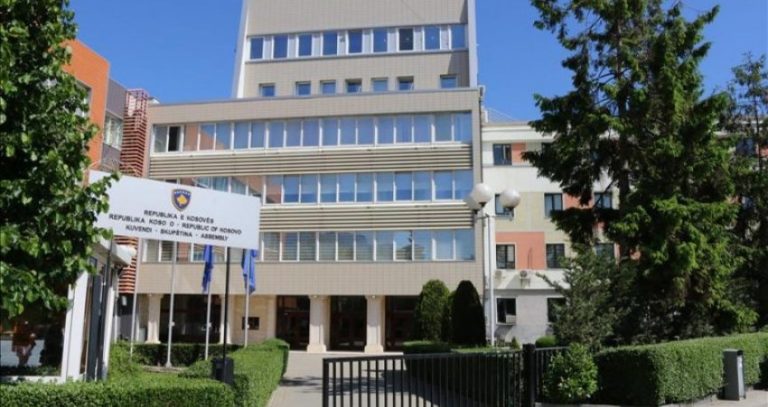
We call upon the Assembly of the Republic of Kosovo to urgently address this issue and adopt new legislation to restore the balance between the state and its citizens.
Author: Urim Vokshi
