

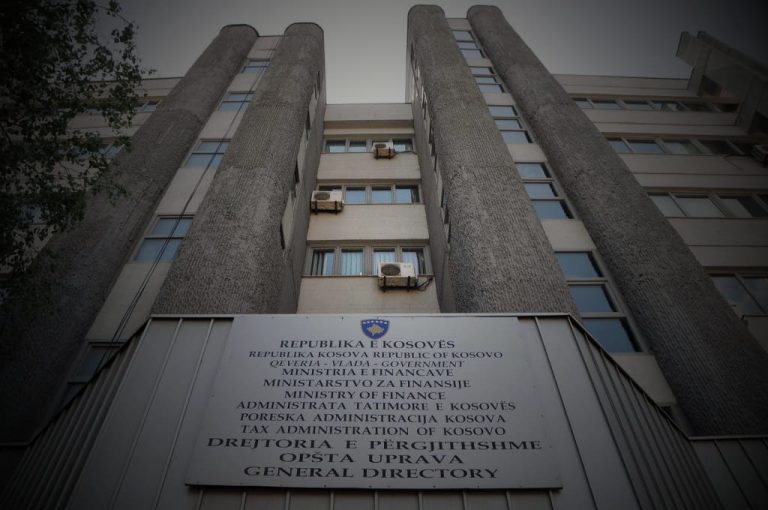
The issue examined in this article concerns the manner in which the Tax Administration of Kosovo (TAK) calculates the costs of construction projects and the impact of this calculation method on the tax obligations of developers.
According to recent practices, particularly those of the Large Taxpayers Department (LTD), TAK has begun imposing premature tax liabilities on developers, claiming that they are selling below cost. This results from TAK’s different interpretation of tax legislation, relying exclusively on Public Explanatory Decision No. 02/2019.
The main problem is that this decision is not entirely consistent with Administrative Instruction No. 02/2016, which clearly provides that the reconciliation of costs and recognition of revenues should take place only upon the full completion of the project.
When TAK changes the manner in which it treats the costs of construction projects, this has a direct impact on developers’ tax obligations. If the project cost has not been accurately determined and the project has not yet been completed, it is unfair to impose taxes based on a partial cost assessment.
Pursuant to Administrative Instruction No. 02/2016, taxation of “below-cost sales” may only be established once the project has been completed and all final assessments have been carried out.
What Does the Administrative Instruction Provide, and Where Does the Problem Lie?
Article 8 of Administrative Instruction No. 02/2016 is clear regarding the treatment of construction contracts:
Taxable income is determined based on the total planned cost of the project. This involves a proportional method whereby revenue is recognized by taking into account the volume of units sold and the cost price per unit. Accordingly, the costs are estimated but are not yet final.
The reconciliation of planned costs with actual costs takes place only upon the full completion of the project. This means that the final calculation of costs and taxable income should be carried out only after the project has been completed.
Registration of unsold units as inventory. Upon completion of the project, unsold units are recorded in the accounting records as inventory.
What Does Public Explanatory Decision No. 02/2019 Provide?
Contrary to the aforementioned Administrative Instruction, Public Explanatory Decision No. 02/2019 allows TAK to impose taxes on construction projects if the market value of the constructed units can be determined even before the full completion of the project.
This means that invoicing may occur earlier, creating a situation in which developers are subjected to taxation for “below-cost sales” in projects that have not yet been completed and for which the final costs are still unknown.
This approach is detrimental to developers because they may be taxed on unfinished units based on provisional assessments.
In practice, this creates an unnecessary financial burden and negatively affects their liquidity, as they are required to pay taxes and penalties at a stage when their projects are still under development.
While the legal framework established by Administrative Instruction No. 02/2016 is more favorable to taxpayers, ensuring that taxes are declared only after the full completion of the project, TAK’s interpretation is creating uncertainty and an unstable environment for developers.
This misinterpretation leads to premature and unfair taxation, as well as arbitrary penalties and interest charges, causing delays in project completion and negatively affecting the construction sector.
Returning to the correct application of Administrative Instruction No. 02/2016, which has greater legal authority than the Public Explanatory Decision, is essential to protecting taxpayers’ interests and ensuring that the law is applied fairly and equally.
An accurate and consistent interpretation of the law would prevent confusion and ensure that businesses are not subjected to unjustified taxation, thereby protecting the stability of the construction sector and contributing to the country’s further economic development.
The application of double standards must stop.
Author: Florin Lata
